Threaded Rods

Threaded Rods

MEGA Product Page Logo - Argentium
Previous slide
Next slide

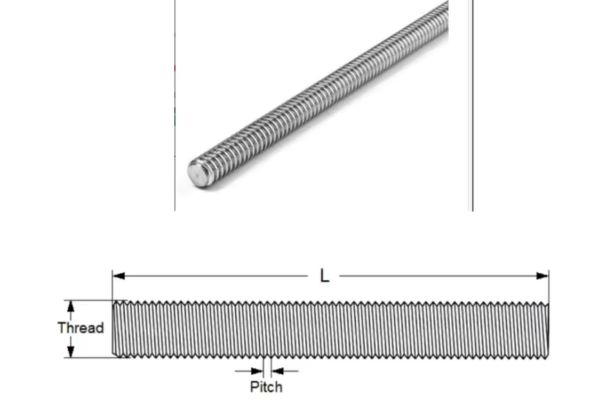
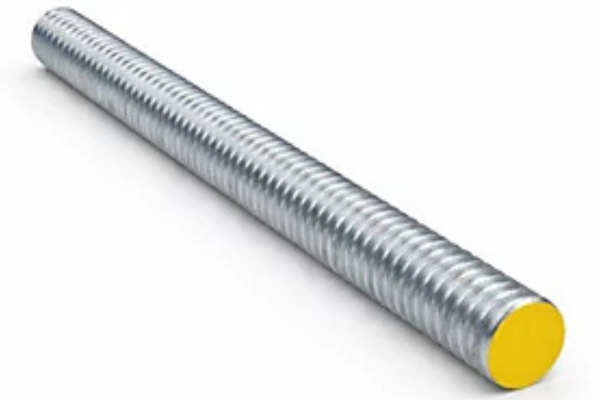
Threaded Rods – Argentium’s Threaded Rods are essential fastening and motion-transfer components widely used in construction, mining, tunneling, and heavy industrial assemblies. Argentium Threaded Rods guarantee strength, durability, and consistent performance through high-precision manufacturing and strict quality control processes. Argentium products are designed with accurately machined thread profiles that allow secure fastening, efficient load transfer, and reliable mechanical positioning in demanding environments.

Argentium Threaded Rods operate effectively in structural and mechanical systems as follows:

  • Securely fasten components using compatible nuts and washers
  • Provide precise adjustment and alignment through threaded rotation
  • Transfer axial loads efficiently across the threaded surface
  • Enable controlled linear motion in mechanical assemblies
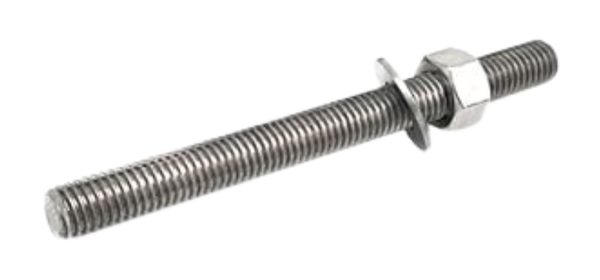
Argentium provides Threaded Rods suitable for both structural fastening and mechanical transmission applications. Argentium Threaded Rods can be used across multiple industrial operations including:

  • Structural fastening and reinforcement
  • Mining and tunneling support systems
  • Mechanical assemblies and machine alignment
  • Industrial lifting and positioning systems

Description of Threaded Rods

Threaded Rods - 3

Argentium Threaded Rods are cylindrical metal rods that feature continuous threads along their length, allowing them to fasten components securely using compatible nuts, washers, or couplings. These rods function similarly to long bolts but without a head, enabling flexible installation across a wide range of engineering and construction assemblies. In industrial and construction environments, Threaded Rods are widely used for structural reinforcement, alignment of machinery, and load transfer mechanisms. Their threaded design allows rotational movement to convert into linear motion or clamping force, making them useful for fastening, positioning, and mechanical drive systems. Argentium supplies Threaded Rods in multiple diameters, lengths, and thread profiles to suit heavy-duty industrial applications. These rods are engineered to maintain excellent dimensional accuracy and high load-bearing capacity, ensuring reliable performance even in demanding operating conditions.

Applications of Threaded Rods

Argentium Threaded Rods are used across a variety of industrial and construction sectors where reliable fastening and load transfer are required. Due to their strong thread geometry and high axial load capacity, Threaded Rods are frequently used in machinery such as presses, screw jacks, actuators, and linear positioning equipment. Common applications include:

  • Structural fastening and reinforcement
  • Mining and tunneling support systems
  • Mechanical assemblies and machine alignment
  • Industrial automation and positioning systems
  • Power transmission and lifting mechanisms
  • Anchoring and foundation support systems

Unique Features of Threaded Rods

Features of Threaded Rods

Operational Benefits

  • High load-bearing capability
  • Precision threading for secure fastening
  • Easy installation with nuts and washers
  • Flexible length and configuration options

Economic Benefits

  • Long operational lifespan
  • Reduced maintenance requirements
  • Cost-effective structural fastening solution
  • Efficient load transfer and positioning performance

Technological Features of Threaded Rods

Effective Load Transmission

The threaded profile of Threaded Rods ensures efficient distribution of axial loads across the entire thread surface, improving strength and reducing wear under continuous operation. Trapezoidal thread profiles also provide a larger contact surface that minimises friction and enhances durability.

Quality Standards

Argentium Threaded Rods are manufactured using high-quality materials such as carbon steel, alloy steel, or stainless steel, ensuring excellent mechanical strength, corrosion resistance, and dimensional accuracy suitable for industrial applications.

Exceptional Reliability

With precision machining and standardised thread geometry, Threaded Rods maintain stable performance even under heavy loads, vibration, or repetitive motion. Their robust design ensures reliable fastening and positioning across long operational cycles.

Your Project’s Potential

Our Megabolt Self Drilling Anchor Bolt (SDA) delivers exceptional strength and efficiency. Designed for easy installation and durability, these anchors are perfect for commercial and DIY projects, providing a secure hold in any material.

Technological Features of Threaded Rods

Argentium Threaded Rods use precision-machined thread profiles to ensure secure fastening and efficient load transfer in demanding structural and mechanical applications. The threaded design allows controlled movement, reliable positioning, and stable load distribution across assemblies. This operating mechanism allows Threaded Rods to provide strong fastening, precise alignment, and efficient load handling in industrial and construction environments. Argentium Threaded Rods operate by:

  1. Engaging with compatible nuts or threaded components to create secure mechanical connections
  2. Transferring axial loads evenly across the thread surface to maintain structural stability
  3. Converting rotational motion into linear movement for positioning or adjustment systems
  4. Maintaining position through thread friction and self-locking properties when motion stops

Unlock Your Project’s Potential

Ready to improve structural reliability and mechanical performance in your operations? Discover how Argentium Threaded Rods can enhance stability, efficiency, and load capacity in your mining, tunnelling, and industrial projects.

Technical Specification of Threaded Rods

Steel Grade Yield Strength MPa Tensile Strength MPa Elongation at Failure A% Uniform Elongation Agt% Relaxation Rate After 1000 hr/% Relaxation Rate After 10r/%
PSB500 ≥ 500 ≥ 630 ≥ 10 - - ≤ 1.5
PSB670 ≥ 670 ≥ 800 ≥ 7 - - -
PSB785 ≥ 785 ≥ 980 ≥ 7 - ≤ 3 -
PSB830 ≥ 830 ≥ 1030 ≥ 6 ≥ 3.5 - -
PSB930 ≥ 930 ≥ 1080 ≥ 6 - - -
PSB1080 ≥ 1080 ≥ 1230 ≥ 6 ≥ 2.5 - -
Nominal Diameter mm Dv mm Dh mm H mm B mm Nominal Sectional Area mm² Nominal Weight Kg/M
15 14.4 14.7 1 4.2 176 1.47
18 18 18 1.2 4.5 254.5 2.11
20 20 20 1.3 4.8 314 2.47
25 25 25 1.6 6 490.9 4.1
32 32 32 2 7 804.2 6.65
36 36 36 2.2 8 1018 8.41
40 40 40 2.5 8 1256.6 10.34
50 50 50 3 9 1963.5 16.28
63.5 63 63.5 3 12 3167 26.5

Conclusion

Argentium Threaded Rods deliver the strength, precision, and reliability required for demanding industrial, construction, mining, and tunnelling applications. Engineered with high-quality materials and precision-machined threads, these rods ensure secure fastening, efficient load transfer, and accurate mechanical positioning across a wide range of operations. Their robust design supports long-term durability, reduced maintenance, and consistent performance even under heavy loads and challenging working conditions.

Whether used for structural reinforcement, machinery alignment, lifting systems, or industrial automation, Argentium Threaded Rods provide a dependable solution for critical fastening and motion-transfer requirements. With a focus on quality, dimensional accuracy, and operational efficiency, Argentium continues to support industries with fastening components designed to enhance safety, stability, and overall project performance.

Explore Our Ranges - Threaded Rods

Frequently Asked Questions

What are threaded rods used for?

Threaded rods are used for fastening, anchoring, and joining structural components in construction, plumbing, electrical installations, and industrial machinery. They provide strong, adjustable connections between two or more objects.

What is the difference between a threaded rod and a stud bolt?

A threaded rod is fully threaded along its entire length and used for general fastening and anchoring, while a stud bolt is partially threaded at both ends with a plain shank in the middle, primarily used in high-pressure flange connections.

What materials are threaded rods available in?

Threaded rods are commonly available in stainless steel, mild steel, galvanized steel, brass, aluminum, and nylon. The material choice depends on the application, load requirements, and environmental conditions such as moisture or chemical exposure.

How do I choose the right size threaded rod for my project?

Choosing the right size depends on the load capacity required, the diameter and thread pitch needed, the material being fastened, and the environmental conditions. Always refer to load charts and consult engineering specifications before selecting a size.

What is the standard length of a threaded rod?

Threaded rods are typically available in standard lengths of 1 meter, 2 meters, and 3 meters. However, custom lengths can be cut to suit specific project requirements in construction, plumbing, or industrial applications.

Are threaded rods weather resistant and suitable for outdoor use?

Yes, certain types such as hot-dip galvanized, stainless steel grade 304 or 316, and coated threaded rods are highly resistant to rust, corrosion, and weather exposure, making them suitable for outdoor and marine environments.

What thread types are available in threaded rods?

The most common thread types include UNC (Unified National Coarse), UNF (Unified National Fine), Metric Coarse, Metric Fine, and ACME threads. The choice of thread type affects grip strength, load distribution, and compatibility with nuts and couplers.

Can threaded rods be cut to a custom length?

Yes, threaded rods can be easily cut to a custom length using a hacksaw, angle grinder, or bolt cutter. After cutting, a thread-restoring die can be used to clean the threads and ensure a proper fit with nuts or couplers.

What grade of threaded rod is strongest?

Grade 8.8, Grade 10.9, and Grade 12.9 are among the strongest threaded rod grades in metric classification. In imperial, Grade 5 and Grade 8 are commonly used for high-strength applications in structural and mechanical engineering.

How are threaded rods installed in concrete or masonry?

Threaded rods can be installed in concrete using chemical anchoring adhesives, expansion anchors, or cast-in-place methods. The rod is inserted into a pre-drilled hole filled with epoxy or resin, which cures and provides a strong, load-bearing anchor point.

What is the difference between coarse thread and fine thread threaded rods?

Coarse thread rods have fewer threads per inch, making them faster to assemble and more resistant to cross-threading, ideal for general construction. Fine thread rods have more threads per inch, offering greater tensile strength and precision, suitable for engineering and automotive applications.

What is the load capacity of a threaded rod?

The load capacity depends on the rod diameter, material grade, thread type, and installation method. For example, a 12mm Grade 4.8 mild steel rod can handle several kilonewtons of tensile load. Always refer to manufacturer load tables and factor in a safety margin.

What nuts and hardware are compatible with threaded rods?

Threaded rods are compatible with hex nuts, coupling nuts, wing nuts, flange nuts, and washers. The thread pitch and diameter of the nut must match the rod specifications exactly to ensure a secure and load-bearing connection.

What is a fully threaded rod vs a partially threaded rod?

A fully threaded rod has threads running the entire length, offering maximum flexibility and adjustability. A partially threaded rod has a smooth shank in the middle, providing better shear strength and rigidity in fixed joint applications.

How do I prevent corrosion on threaded rods in humid or chemical environments?

To prevent corrosion, use stainless steel or galvanized threaded rods, apply anti-corrosion coatings or thread sealants, and avoid contact between dissimilar metals. Regular inspection and the use of nylon-insert lock nuts can also help maintain joint integrity over time.

Message Icon - Argentium

We want to hear from you

Our Products:

Our Blogs: