
- By Argentium
- Date
Understanding Grouted Rock Anchors
In modern geotechnical engineering, stability is everything. Whether it’s a steep slope, a deep excavation, or an underground tunnel, maintaining structural integrity under varying loads and ground conditions is critical. Among the most reliable solutions used today are grouted rock anchors, an essential technology that ensures safety, durability, and long-term performance in challenging environments.
This blog explores the concept, working principles, components, installation methods, applications, and advantages of grouted rock anchors, while aligning with the advanced anchoring and drilling solutions offered by Argentium.
What Are Grouted Rock Anchors?
Grouted rock anchors are structural elements used to transfer tensile loads from a structure into stable rock formations. They typically consist of a steel tendon (bar, strand, or hollow rod) inserted into a drilled hole and bonded to the surrounding rock using cementitious grout.
These anchors are widely used in geotechnical and civil engineering applications where ground stability is a concern. By forming a strong bond between the anchor and the rock mass, rock anchors create a stable load-bearing system capable of resisting forces such as uplift, lateral pressure, and sliding.
Unlike mechanical anchors that rely on friction or expansion, grouted rock depend on the bond strength between grout and rock, making them highly effective in fractured or irregular rock formations.
Key Components of Grouted Rock Anchors
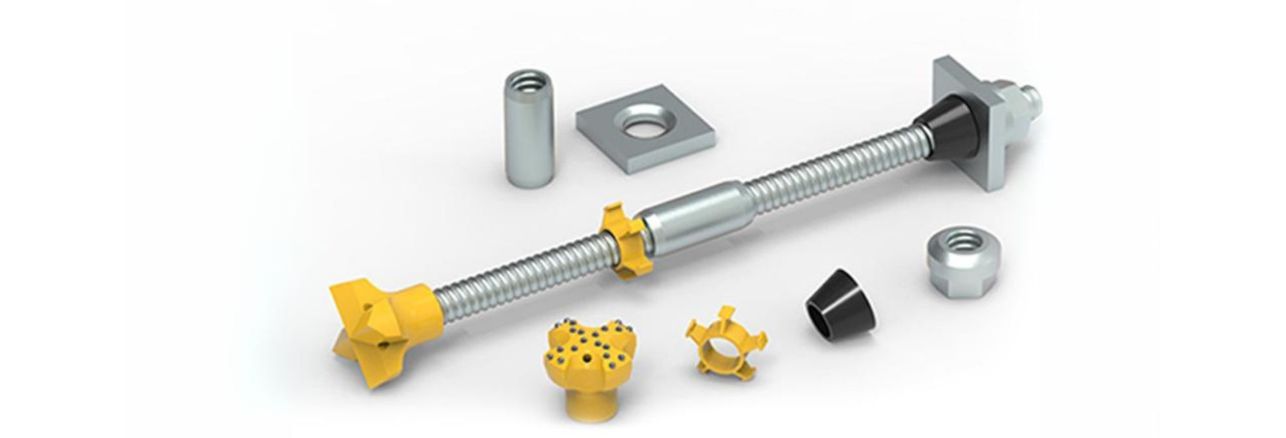
Understanding the structure of grouted rock anchors helps engineers design more efficient and reliable systems. A typical anchor system includes:
1. Tendon (Steel Element)
The tendon is the primary load-carrying component, usually made of high-strength steel bars or strands. It transfers tensile forces from the structure to the ground.
2. Bond Length
This is the portion of the anchor embedded in grout and rock. It plays a critical role in load transfer by bonding the tendon to the surrounding material.
3. Free Length
The free length is an unbonded section that allows the tendon to stretch during tensioning. This ensures proper load distribution and prevents stress concentration.
4. Anchor Head
The anchor head connects the tendon to the structure and includes components like bearing plates and nuts to transfer loads effectively.
5. Grout Body
The grout fills the drilled hole, bonding the tendon to the rock and protecting it from corrosion. It also distributes stress uniformly along the bond length.
Each of these components works together to ensure that grouted rock anchors perform efficiently under varying load conditions.
How Grouted Rock Anchors Work
The working principle of grouted rock is based on load transfer through bond stress. When a tensile load is applied, the force travels from the structure to the anchor head, through the tendon, and into the grout body. From there, it is transferred into the surrounding rock mass.
The effectiveness of rock anchors depends largely on:
- Quality of grout and its bond with rock
- Strength and condition of the rock mass
- Proper installation and alignment
- Adequate bond length
The bond between grout and rock is the key factor that determines the load-bearing capacity of grouted rock.
Types of Grouted Rock Anchors
Different project requirements call for different types of grouted rock anchors. Some common variations include:
1. Passive Anchors
These anchors are not pre-tensioned and only activate when movement occurs in the structure or ground.
2. Active (Prestressed) Anchors
These are tensioned during installation to provide immediate support and reduce deformation.
3. Permanent Anchors
Designed for long-term applications, these anchors include corrosion protection and high durability features.
4. Temporary Anchors
Used during construction phases and removed or abandoned after project completion.
5. Hollow Bar Anchors
Often used in challenging ground conditions, allowing simultaneous drilling and grouting.
Argentium’s solutions align with these advanced self drilling anchor, ensuring performance across varied geotechnical conditions.
Installation Process of Grouted Rock Anchors
The installation of grouted rock anchors is a precise process that directly impacts their performance. The general steps include:
1. Drilling the Borehole
A hole is drilled into the rock using specialised drilling equipment. The diameter and depth depend on design requirements.
2. Cleaning the Hole
Loose debris, dust, and water are removed to ensure proper bonding.
3. Inserting the Anchor
The steel tendon, along with necessary accessories, is inserted into the borehole.
4. Grouting
Cement grout is injected into the hole to fill all voids and bond the anchor to the rock.
5. Curing
The grout is allowed to cure, typically taking several days to achieve the required strength.
6. Tensioning (if required)
For active anchors, the tendon is tensioned and locked off to apply the desired load.
Proper installation is essential for maximising the efficiency and lifespan of grouted rock.
Applications of Grouted Rock Anchors
Grouted rock anchors are widely used across various infrastructure and construction projects. Their versatility makes them indispensable in modern engineering.
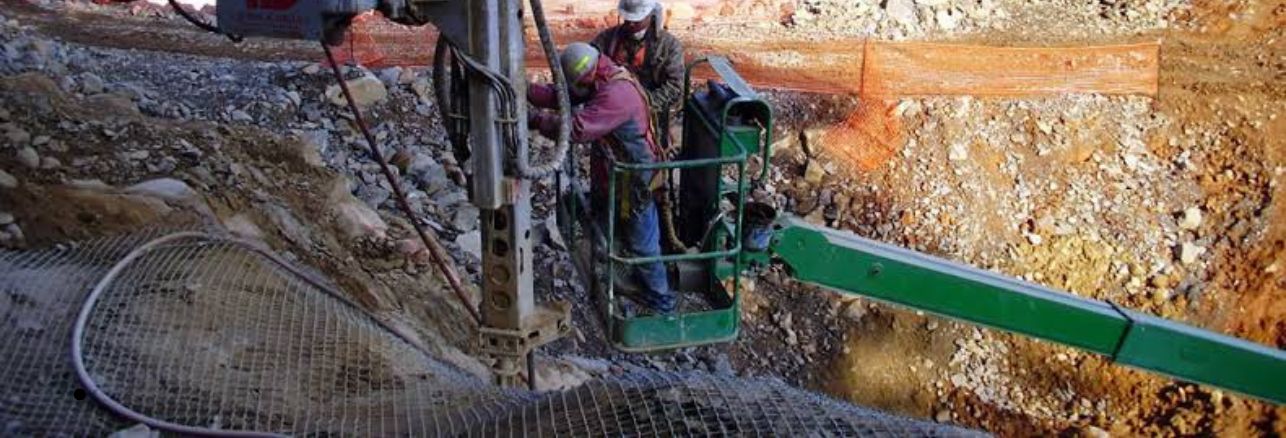
1. Slope Stabilisation
They prevent landslides by anchoring unstable rock masses to stable layers.
2. Retaining Structures
Used in retaining walls to resist lateral earth pressures.
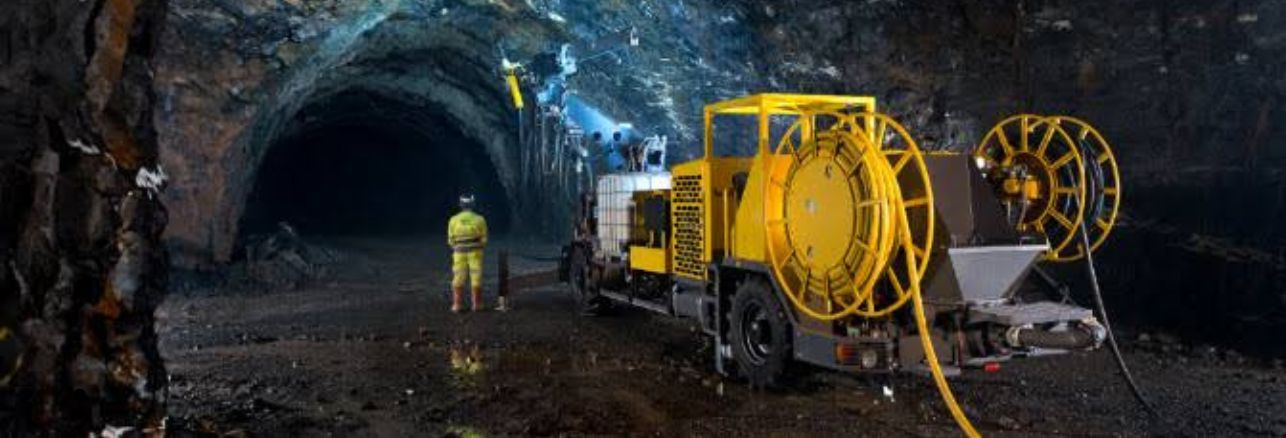
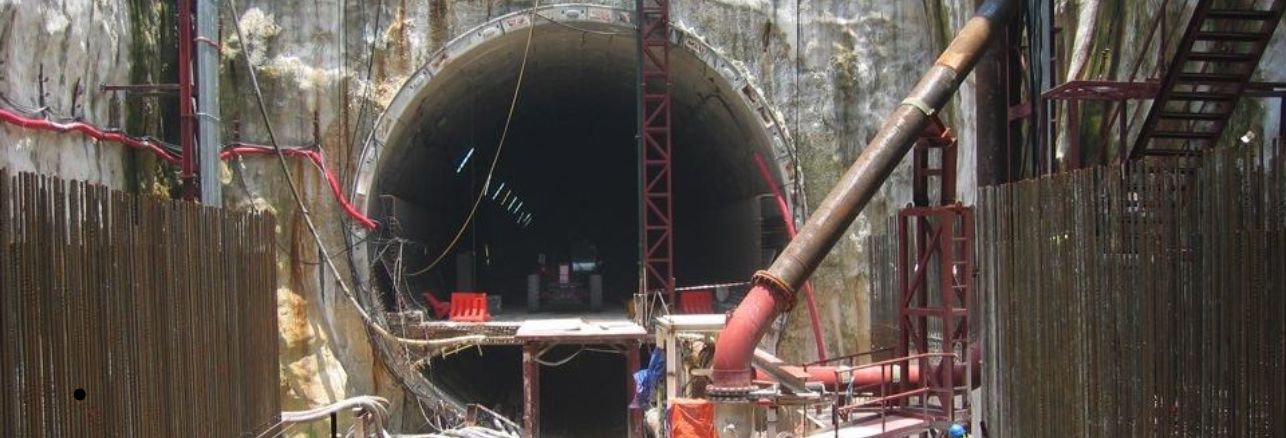
3. Tunnels and Underground Excavations
Provide reinforcement and prevent collapse in underground spaces.
4. Foundations
Used to resist uplift forces in structures like towers, bridges, and wind turbines.
5. Dams and Hydraulic Structures
Enhance stability and resist water-induced forces.
6. Mining Operations
Support rock masses and improve safety in underground solutions.
These applications highlight the critical role grouted rock play in ensuring structural safety and performance.
Advantages of Grouted Rock Anchors
The growing preference for grouted rock is due to their numerous benefits:
High Load Capacity
They can handle significant tensile forces due to strong bonding with rock.
Adaptability
Suitable for a wide range of geological conditions, including fractured rock.
Durability
Properly designed anchors offer long-term performance with corrosion protection.
Cost-Effective
Reduced need for massive structural elements leads to cost savings.
Minimal Surface Disruption
Installation causes less disturbance compared to other stabilisation methods.
Versatility
Applicable in both temporary and permanent structures.
Grouted Rock Anchors vs Rock Bolts
While both systems are used for ground support, they serve different purposes.
- Rock bolts reinforce the rock mass internally, improving cohesion.
- Grouted rock anchors transfer loads from structures to stable ground layers.
Rock bolts are typically shorter and used for immediate support, while grouted rock anchors are longer and designed for load transfer and structural stability.
Design Considerations for Grouted Rock Anchors
Designing effective grouted rock requires careful evaluation of several factors:
Geological Conditions
Understanding rock type, fractures, and groundwater conditions is essential.
Load Requirements
The anchor must be designed to handle expected loads with safety factors.
Bond Strength
Adequate bond length and grout quality are critical for performance.
Corrosion Protection
Especially important for permanent installations.
Installation Accuracy
Misalignment or improper grouting can significantly reduce capacity.
Engineers must conduct site-specific analysis to ensure optimal performance of grouted rock anchors.
Maintenance and Longevity
Although grouted rock anchors are designed for durability, maintenance plays a key role in ensuring long-term performance.
Regular inspections help detect:
- Corrosion or material degradation
- Loss of tension in active anchors
- Structural movement or displacement
Proper monitoring ensures that rock anchors continue to perform as intended over their service life.
The Role of Advanced Systems in Modern Anchoring
With advancements in drilling and anchoring technologies, modern systems, such as those offered by Argentium, have significantly improved the efficiency and reliability of grouted rock anchors.
Innovations include:
- Self-drilling anchor systems for faster installation
- High-strength threaded bars for improved load capacity
- Advanced grouting techniques for better bonding
- Corrosion-resistant materials for long-term durability
These developments have made grouted rock more adaptable to complex and demanding project environments.
Conclusion
Grouted rock anchors are a cornerstone of modern geotechnical engineering, offering unmatched stability, adaptability, and performance in a wide range of applications. By effectively transferring loads into stable rock formations, they ensure the safety and longevity of critical infrastructure.
From slope stabilisation to underground construction, grouted rock continue to play a vital role in shaping resilient and sustainable engineering solutions. With the integration of advanced technologies and systems, like those provided by Argentium, the future of anchoring solutions is more efficient, reliable, and innovative than ever before.
Frequently Asked Questions
A grouted rock anchor is a structural element, typically a steel bar or cable, inserted into a drilled hole in rock and bonded in place with cement or resin grout to transfer tensile, compressive, or shear loads into the surrounding rock mass.
They work by transferring load from a structure through the anchor’s fixed (bonded) length into competent rock via friction and mechanical interlock created by the grout, while the free (unbonded) length allows the anchor to stretch and develop tension.
Common applications include slope stabilization, retaining wall support, tunnel and underground excavation support, foundation anchoring for towers and bridges, dam stabilization, and anchoring structures against uplift or overturning forces.
Mechanical anchors rely on an expansion shell or wedge for instant mechanical grip, while grouted anchors rely on chemical/cementitious bond strength that develops over curing time, grouted anchors generally offer higher long-term capacity and corrosion resistance.
Rock bolts are typically shorter (a few meters) and used for immediate local rock reinforcement, while rock anchors are longer, engineered tension elements designed for structural load transfer over greater depths.
Anchors are usually made from high-strength steel bars, strand cables, or threaded bars, combined with cement grout (most common) or resin/epoxy grout, plus corrosion protection sheathing where required.
Depth depends on load requirements and rock quality, but the fixed (bonded) length must extend into sound, competent rock beyond any potential failure plane, often verified through site investigation and pull-out testing.
Capacity varies widely by anchor diameter, bond length, and rock strength, ranging from tens of tonnes to several hundred tonnes; actual capacity is confirmed through proof and performance testing on site.
With proper corrosion protection and installation, grouted rock anchors can have a design life of 50-120 years, making them suitable for both temporary and permanent structural applications.
Both, temporary anchors (typically under 2 years, minimal corrosion protection) are used for construction-stage support, while permanent anchors are designed with double corrosion protection systems for decades-long service.
Protection methods include cement grout cover, corrugated plastic sheathing, epoxy coatings, and encapsulation systems, often combined in “double corrosion protection” for permanent installations exposed to aggressive ground conditions.
Standard tests include proof testing (verifying design load capacity on production anchors) and performance/extensometer testing (measuring load-extension behavior), typically per codes like PTI DC35.1, BS EN 1537, or Eurocode 7.
Common failure causes include inadequate bond length, poor grout quality or voids, corrosion of the steel tendon, rock mass failure beyond the anchor zone, or overloading beyond design capacity.
Costs depend on anchor length, diameter, load capacity, rock drilling difficulty, access conditions, and corrosion protection requirements — site geology and testing needs are usually the biggest cost drivers.
Key standards include PTI DC35.1 (Post-Tensioning Institute, US), BS EN 1537 and Eurocode 7 (Europe), and various national geotechnical codes that specify design, testing, and corrosion protection requirements.

